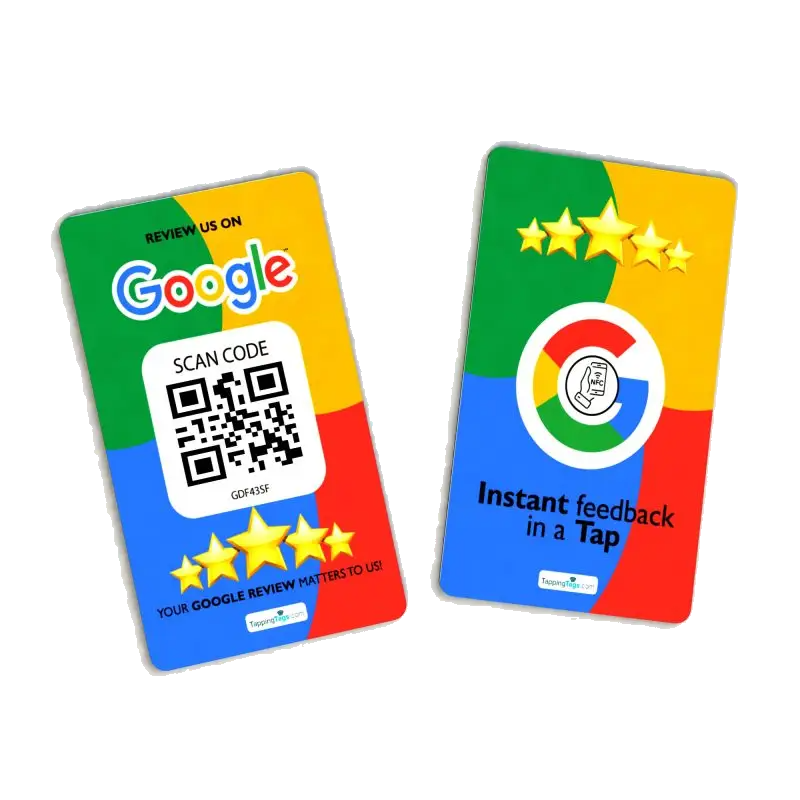
What NFC and QR Review Products Cost in Coconut Creek

If you run a shop, salon, clinic or service van in Coconut Creek and you are pricing out custom NFC and QR Google review products, the honest short answer is that three things set the number: the format you pick, the quantity you order, and how much custom artwork goes on the piece. Tappingtags lists current pricing in its order information, and the walkthrough below shows exactly which of those choices move the cost up or down, so a small business can buy the right thing once instead of guessing.
- Format, quantity and custom artwork are the three levers that decide what you pay.
- One card or one counter stand is the cheapest way in; ordering several pieces at once normally lowers the cost per piece.
- The product is physical hardware, so check the order information for exactly what is included before you buy.
- Every Tappingtags product opens a review destination that you configure, so you can change where it points without reordering.
- The customer still decides whether to write anything - nothing is posted unless they approve and submit it themselves.
The situation
Picture a small service business off Lyons Road in Coconut Creek. Five employees, steady repeat customers, and a Google profile that has collected a thin handful of reviews over several years - almost all of them from the one month the owner remembered to ask.
The owner is not short of happy customers. They are short of a moment of asking that does not feel awkward and does not depend on anyone remembering. Texting a link works when the front desk is quiet. On a Saturday it never happens.
So the owner starts shopping for NFC review cards and QR review stands and immediately runs into the real question: is this a twenty dollar thing or a few hundred dollar thing, and what exactly is being paid for?
What you are actually paying for
It helps to separate the purchase into its parts, because that is where the price comes from:
- The physical piece. A tap card, a keychain tag, a counter stand or a plaque. Material and size matter here more than anything else.
- The NFC chip, the QR code, or both. Many businesses want both on the same piece so that an older phone, or a customer who simply prefers to scan, is never stuck.
- The custom artwork. A plain stock piece costs less than one printed with your own logo, colours and wording.
- The quantity. One stand for the counter is a different order from a card for every technician in every van.
- The setup. Pointing the product at the review destination you want. Tappingtags provides setup guidance so this is a configuration step, not a development project.
A quick cost reference
The figures below are typical general market ranges for this category of product, not Tappingtags pricing. Use them to budget and sanity check, then take the real number from the current order information.
| What you order | Typical general market range (per piece) | What moves the price |
|---|---|---|
| One stock NFC card or tag | Roughly $10 to $30 | Entry point, little or no artwork work |
| One counter stand or plaque with QR and NFC | Roughly $20 to $60 | Larger piece, sturdier material, more printed surface |
| Fully custom printed piece with your own branding | Upper end of the above, plus any artwork setup | Logo, colours, custom wording, proofing |
| Multi piece order for a team or several locations | Lower per piece as the count rises | Volume, with the same artwork reused across the order |
For a single location business in Coconut Creek, the realistic shape of a first order is small: one piece for the counter and a few cards for staff who are face to face with customers. That is a modest one off hardware spend, not an open ended programme.
What the process looks like
From the owner's side, the sequence is short and there is no technical work in it:
- Pick the formats. Decide what fits how you actually meet customers. A counter needs a stand. A mobile technician needs something pocket sized.
- Decide on customization. Stock design or your own branding. This is the main place a small order grows.
- Choose the quantity. Count the touchpoints, not the staff list. A reception desk, a waiting area and three vans is five pieces.
- Configure the review destination. The product opens a review link that you set, using the setup guidance supplied with it. For the full walkthrough, see Review Link Setup for NFC and QR in Coconut Creek.
- Test it before it goes out. Tap it with your own phone, scan the QR with a second phone, and confirm the destination that opens is the one you intended.
Because the destination is configurable rather than burned in, a later change - a new profile, a different place you want feedback to land - does not mean reordering the hardware.
What to expect afterward
Back at our Coconut Creek business, the change is not magic and it is worth being plain about that. What the hardware fixes is the friction: the customer is handed something, taps or scans it, and the review page is open on their own phone in a second or two.
What it does not do is write anything. The customer reads, decides, types and submits. Nothing is posted on their behalf and no review or rating is promised by buying a product - any business that tells you otherwise is selling something different from what this is.
The realistic outcome is that asking becomes a habit because it finally takes no effort. Staff who would never say the sentence out loud will happily slide a card across a counter. Owners who want a second channel can pair the physical pieces with a text message to a customer who has already left, so the ask reaches people who were in and out in ninety seconds.
A sensible way to judge the spend after a month or two is simple: are you asking far more often than you were before? That is the behaviour the product is buying. Everything downstream of it is up to your customers.
Budgeting it as a small Coconut Creek business
Three practical rules keep the order honest:
- Buy for the touchpoints you really have. Unused cards in a drawer are the most common waste in this category.
- Start stock, upgrade to custom later if you want to see whether the team actually uses it before paying for printed branding.
- Treat it as one time hardware. Check the order information for what is included with your chosen product so there are no surprises.
Ready to price your own order?
Look over the NFC Google review cards and the QR code review stands, read how Tappingtags works if you want the mechanics first, then open the current order information for live pricing on the exact format and quantity your Coconut Creek business needs. If you are unsure which pieces fit your counter and your team, start with one stand and a small set of cards and expand from there.
Frequently Asked Questions
Budget by touchpoint rather than by headcount. A single location usually starts with one counter piece and a few cards, which is a small one time hardware purchase. Typical market ranges run from roughly $10 to $30 for a stock card and roughly $20 to $60 for a stand or plaque, but the real figure for your order comes from the current Tappingtags order information.
Yes, in general. A plain stock piece is the cheaper entry point because there is no artwork to set up or proof. Printing your own logo, colours and wording adds work to the order, which is why many owners start stock, confirm the team uses it, then upgrade to custom later.
No reorder is needed for that. Tappingtags products open a review destination that you configure, so if you need the card or stand to open a different link later you change the configuration rather than buying new hardware. Setup guidance is provided for this step.
Many businesses want both on the same piece, and that is a normal request. NFC covers customers who can tap, and the QR code covers anyone who would rather scan or whose phone does not tap easily. Combining both usually sits at the higher end of a format's range because there is more printed surface and a chip.
What the product does is remove the friction: the customer taps or scans and the review destination opens on their phone. The customer still reads, writes and submits it themselves, and nothing is posted without them doing that. No product can promise reviews or ratings, so judge the purchase on whether your team is now asking far more often than before.