Do You Need Review Collection Tools? 6 Checks

Here is the short answer: if you serve more than roughly 20 customers a week and you are picking up fewer than two or three new reviews a month, the issue is almost never that customers dislike you - it is that nobody is being asked at the moment they would have said yes. Review collection tools earn their place when your asking process depends on memory, mood, or a staff member typing out a link from scratch. The six checks below take about 20 minutes and give you a clear verdict either way.
- Judge your last 90 days, not your lifetime review total - a strong average can hide a silent profile.
- Compare new reviews against customers actually served to find your real capture gap.
- If reviews only arrive when one specific person is on shift, you have a personality, not a process.
- Time how long it takes a customer to reach your review page; fumbling is where most asks die.
- Fail two or more checks and a tool helps; fail none and your current habit is already working.
1. Count the reviews you received in the last 90 days
Open your main review profile and count only the reviews dated inside the last 90 days. Ignore the lifetime total, because a 4.8 average built from 60 reviews can sit on top of a profile that has been quiet since spring. Write that 90-day number down, since every other check compares back to it.
If the number is zero or one, you do not have a reputation problem. You have a collection problem, and that is the kind a tool is actually built to solve.
2. Compare reviews to the customers you actually served
Now pull the rough number of jobs, visits, or transactions you completed in that same 90-day window. Divide your new reviews by that number to get a crude review capture rate. Businesses that ask properly and make it easy usually land somewhere between a couple of percent and the mid teens, depending on how personal the service is.
If you served 300 customers and collected two reviews, the gap is your answer in one line. You are generating plenty of goodwill and capturing almost none of it.
3. Check the date on your newest review
Recency is what the reader notices first. A newest review from eight months ago quietly suggests "this place may have changed," even when the average score is excellent. Then look at the gaps between your last five reviews - if they arrive in clumps whenever someone remembers to push, you are running campaigns, not a process.
- Fewer than 2 new reviews in 90 days - fail
- Capture rate under 1% of customers served - fail
- Newest review older than 60 days - fail
- Verbal asks logged for under half your customers - fail
- More than 30 seconds to reach your review page - fail
- Reviews track one person's shifts - fail
4. Watch what happens when your team asks out loud
For one week, ask staff to request a review verbally at the end of each job or sale and tally how many times they genuinely asked. Compare that tally against the number of customers served that week. The distance between "we ask everyone" and what the tally shows is usually the most revealing number in this whole exercise.
Verbal asks fail quietly. The customer agrees, means it, walks out, and the intention does not survive the drive home.
5. Time the journey from "yes" to a posted review
Hand your phone to a friend who has never reviewed you and ask them to find your review form the way a customer would. Time it, and count the taps, the searching, and any sign-in screens along the way.
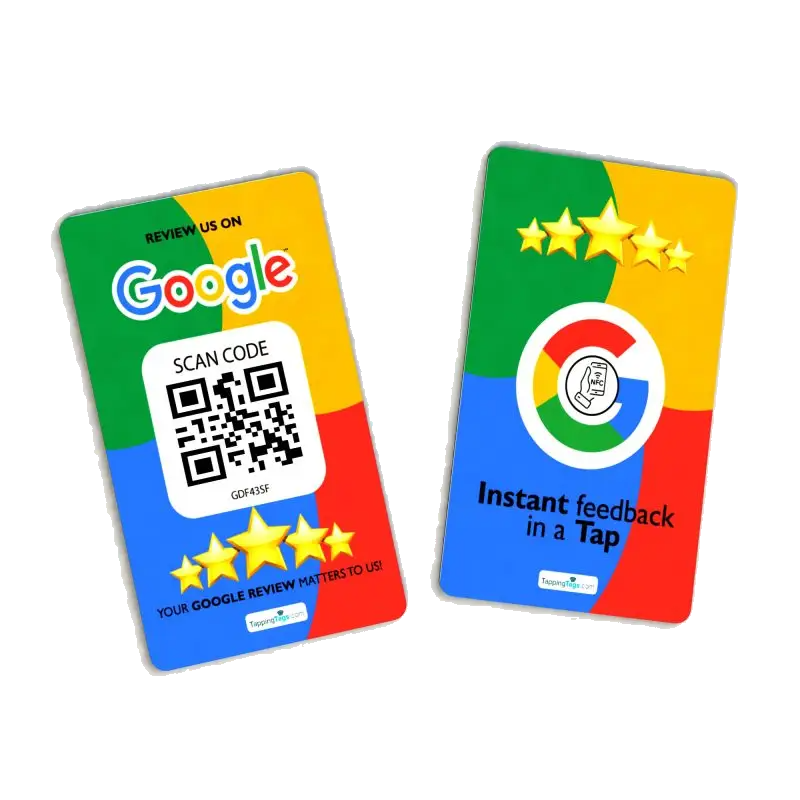
If it takes more than about 30 seconds of fumbling just to reach the right page, most people give up before they ever start typing. Products that open a configured review destination in one tap exist precisely for this reason: shortening that journey is the part of the process you can actually control.
6. Ask whether collection survives without one specific person
If reviews only appear when the owner or one enthusiastic team member is on shift, your process is a personality rather than a system. Test it by checking whether your review dates line up with that person's rota. Anything that only works when one human remembers will stop the week they go on holiday.
Add up your answers: the honest verdict
Count the checks you failed and read the result straight.
- 0 to 1 failed - your current habit is working. Keep doing exactly what you are doing and revisit this in six months.
- 2 to 3 failed - friction is your bottleneck. Something that puts a one-tap ask in the customer's hand at the counter will do more than any new script. For a closer look at which failures matter most, see Do You Need NFC and QR Review Tools? 7 Signs.
- 4 or more failed - you have no repeatable process at all. This is where a physical NFC or QR product and a configured review link change the day-to-day most, because the ask stops depending on anyone remembering.
Worth saying plainly: a tool does not decide whether people review you, and nothing is ever posted without the customer's own approval. The customer still writes and submits their own words - the tool only removes the steps between willingness and the review page.
When to call a pro instead
A faster ask is not the fix for everything. If your recent reviews are dropping because of a genuine service or staffing issue, solve that first, because easier collection will simply surface the problem sooner and louder.
Reach out for help when you are unsure which review destination to point to, when you manage several profiles and want the setup consistent across them, or when you want someone to sanity-check your configuration before you hand anything to staff. That is what setup guidance is for, and it is a short conversation rather than a project.
Your next step
Run the six checks this week and write down the number of failures - that single figure tells you whether to change anything at all. If you came out at two or more, visit tappingtags.com to see the NFC and QR review tools, how the configurable review link works, and what ordering involves.
Frequently Asked Questions
There is no universal number, because it depends on how many customers you serve and how personal the service is. A more useful measure is your capture rate: new reviews in the last 90 days divided by customers served in the same period. If that works out below about 1%, the gap is almost always friction in how you ask rather than how customers feel.
Run check 4 before you decide. Have staff tally every verbal ask for one week and compare it to the number of customers served - most teams discover they ask far less often than they believe, and that the ask rarely survives the customer leaving. If your tally is close to your customer count and reviews are arriving steadily, your current process is fine as it is.
The customer does not need to install anything or create an account. They tap or scan with their own phone and the configured review destination opens, which is usually fewer steps than finding your profile by searching. If someone cannot tap, scanning the QR code with the phone camera covers the same ground.
Yes - the review link on NFC and QR products is configurable, so the destination can be set up and updated as your needs change. That matters if you decide to point customers to a different review platform or profile later on. Setup guidance is available if you want help choosing the destination before you roll it out to staff.
No. Nothing posts without the customer's approval - they write and submit their own review in their own words. The tool only removes the steps between a customer saying yes and reaching the review page.