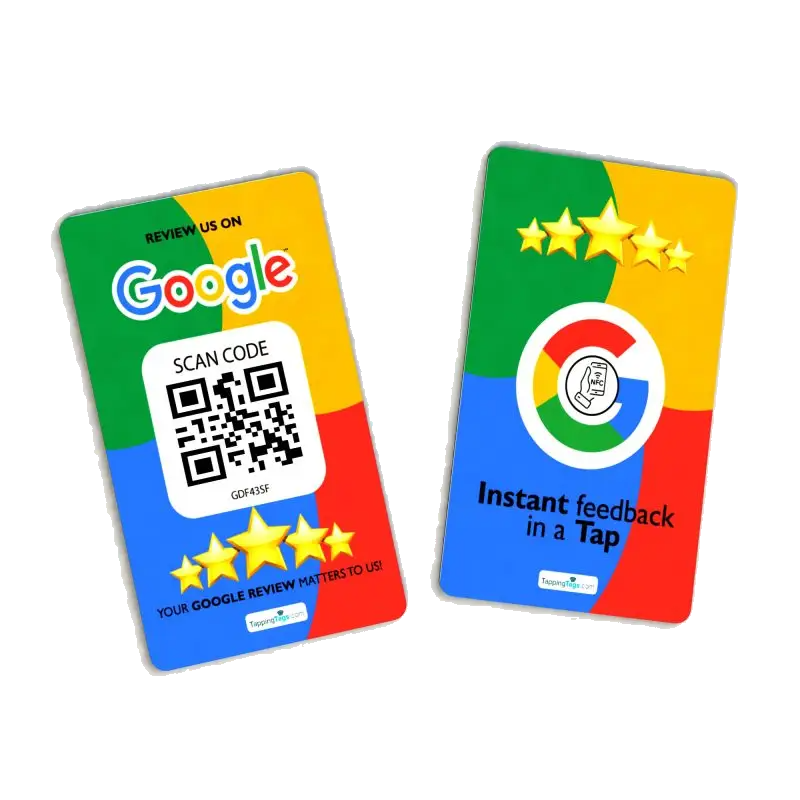
Do You Need NFC and QR Review Tools? 7 Signs

You need NFC and QR review tools when you are already asking customers for reviews and still not getting them - the ask is happening, but the handoff between the ask and the review page is breaking. The quickest way to know is to measure two numbers over one week: how many customers you actually asked, and how many reviews showed up. If you asked ten or more people and got one or none, the problem is friction, not goodwill.
- The real test is your ask-to-review rate, not your total review count - tally asks for one week and compare.
- Count the taps between your ask and the review box on your own phone; more than three is a drop-off zone.
- If customers who promised a review say they "could not find the page" or "forgot later," that is a routing problem, not a loyalty problem.
- In-person moments point to a tap product; remote moments point to a scan or a text link. Many businesses have both.
- Hitting two or more of the seven signs below means a configured tap or scan destination is worth setting up.
1. Count your asks against your reviews for one week
Keep a tally sheet at the counter or in your notes app and mark every single time you or a staff member asks a customer for a review. After seven days, compare that tally to the number of new reviews on the page you send people to. An ask-to-review rate under roughly 10 percent is the clearest sign that the request itself is fine and the path afterwards is the problem. If you cannot fill in the tally at all because nobody is asking, fix the asking habit first - no tool rescues a request that never happens.
2. Count the taps between the ask and the review box
Pick up your own phone and do exactly what you ask customers to do: find your business, open the review page, and get to the point where you could start typing. Count every tap, search and scroll along the way. Anything over three taps is a drop-off zone, and remember that the people you ask are usually standing up, holding a bag, or already heading for the door. A tap or a scan that opens your chosen review destination directly removes the whole search step, which is the entire point of NFC review tags.
3. Check the gap between the service and the ask
Write down when the work finishes and when the review request actually reaches the customer. If the honest answer is "a day or two later, by text, when I remember," you are asking a cooled-down customer. The window where people are most willing to say something nice is while they are still in front of you, which is the whole reason in-person tools exist. A routine gap of more than a few hours is a sign on its own.
4. Find out where the handoff is dying
Ask three recent customers who said they would leave a review what stopped them. The answers are almost always mechanical rather than emotional, and they tend to fall into a short list:
- They could not find the right business page and gave up on the search results.
- They were not signed in on the device they happened to be holding.
- They meant to do it later at home and forgot.
- They were handed a card or a verbal "just look us up" and never typed it in.
Every one of those is a routing failure, not a reluctant customer. If two of your three answers come from that list, a pre-configured tap or scan destination addresses the thing that is actually breaking.
5. Decide whether your review moments are in person or remote
This step decides the format, not whether you need one. If customers are physically in front of you at the happy moment - in the chair, at the counter, standing beside a finished install - a tap works, because the phone is already in their hand. If the moment is remote, such as a delivery or a service call you finish and leave, then QR code review tools on a leave-behind item or a text link do the same job. Plenty of local businesses have both moments and need both paths.
6. Check whether the asking depends on one person
Count how many of your reviews arrived on shifts when you personally were working. If the answer is most of them, your review flow is a personality rather than a process. A physical object sitting on the counter asks on its own and gives a new or shy staff member something to point at instead of a speech to deliver, which is usually the difference between a policy and a habit.
7. Look at the shape of your review history, not the total
Open your review page and read the dates instead of the count. Clusters - four in one week, then nothing for three months - mean somebody pushed hard and then stopped. Recent, steady dates matter to the people reading them, because a customer deciding today looks at the newest reviews first. A lumpy history is a sign you need a method that keeps working without a push.
Score yourself: how many signs did you hit?
Go back through the seven steps and mark each one yes or no, then read your count honestly:
- Zero to one sign: your current method is working. Leave it alone.
- Two to three signs: a tap or scan tool will remove real friction. Start small with one or two placements at your busiest happy moment.
- Four or more signs: you have a handoff problem on every path. Set up one configured destination and put a product at each point where a customer is both pleased and holding a phone.
Worth being plain about what these tools do and do not do. The product opens the review destination you configured, which makes it easier for a happy customer to leave a review at the moment they are willing. The customer still writes and submits it themselves, in their own words, on the platform you pointed them to.
When to stop self-diagnosing and just ask
If you have run the seven checks and still cannot tell whether the friction or the ask is your weak point, send over the two numbers from step one and the tap count from step two, and we will tell you which one it is. The same goes for choosing a format for a business with both in-person and remote moments, or working out how many placements a multi-location setup needs. That is a short conversation, not a project.
Ready to fix the handoff? Read how it works to see exactly what happens when a customer taps or scans, then check order information for the products and quantities that match your counter, your crew and your leave-behinds. If you run a business in Coconut Creek and want examples closer to home, our NFC and QR Review Tools in Coconut Creek: Buyer Guide walks through the same checklist with local context. And if you are still unsure which destination to configure or how many placements your setup needs, our 7 signs you need setup guidance for NFC review tags covers exactly when it is worth asking for help before you order.
Frequently Asked Questions
Tally every review request you make for one week, then compare it to the number of new reviews. If you are asking ten or more customers and almost none arrive, the ask is working and the path afterwards is breaking, which is what a tap or scan tool fixes. If the tally is nearly empty, build the asking habit first.
There is no official benchmark, but the number itself is what matters: measure yours, write it down, and watch it. A rate under roughly 10 percent usually points to friction in the handoff rather than unhappy customers, especially if the people you asked said yes at the time.
It depends on where your happy moment happens. If the customer is physically in front of you, a tap works because their phone is already in hand. If you finish and leave, or deliver, a scan on a leave-behind item or a text link covers it. Businesses with both moments usually want both paths.
Yes. The product simply opens the review destination you configured. The customer writes and submits their own review in their own words on that platform, so nothing is written or posted for them.
The review link behind the products is configurable, so the destination can be set up for the page you want customers to land on. If you are unsure which destination is right, or you have multiple locations, ask for setup guidance before you order in volume.