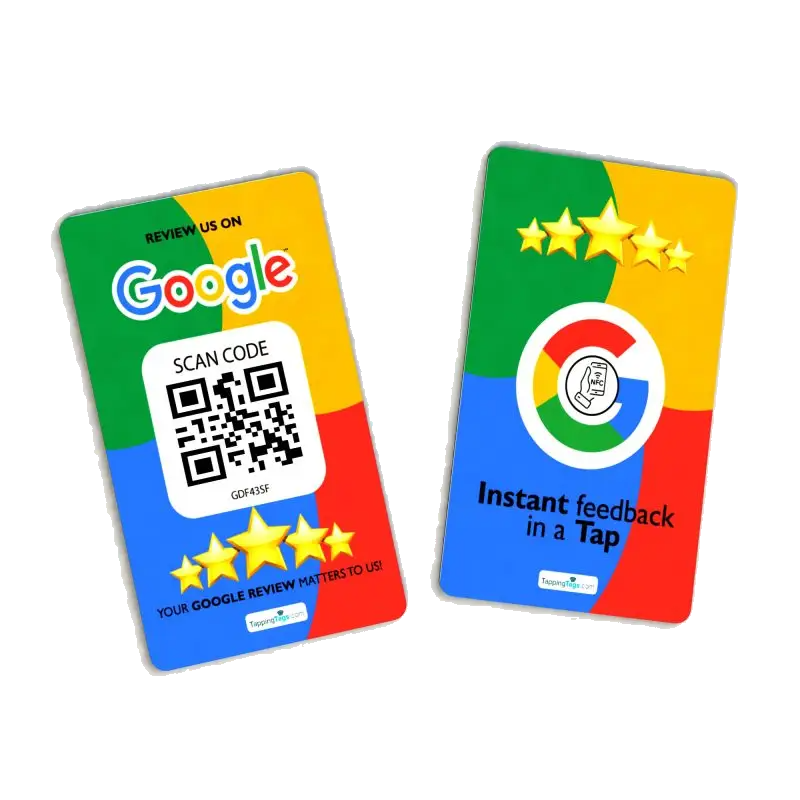
Do You Need Configurable Review Links for NFC/QR?

You need configurable review link setup if the destination behind your NFC or QR product could ever change: a rebuilt review profile, a second location, a new team member, or simply a different review place than the one you started with. If you have exactly one destination and it will never move, a fixed link baked into the product is fine. The checks below take about ten minutes and tell you which of the two you are. If you have not yet decided whether NFC or QR review tools make sense for your business at all, start with Do You Need NFC and QR Review Tools? 7 Signs before working through the checks below.
- The deciding question: if the link had to point somewhere else tomorrow, could you change it without buying new hardware?
- The strongest signs are more than one location or team, a review profile that has already changed once, and units already out in the world.
- A single permanent destination at a single counter is the one case where a fixed link is genuinely enough.
- Test on both an iPhone and an Android phone before you order in volume.
- Whatever the destination, the customer still writes and submits their own review, so nothing posts on its own.
1. Ask the one question that settles it
Pick up the tag, card, or stand you already have (or the one you are about to order) and ask: if this needed to point somewhere else tomorrow morning, what would I have to do? If the honest answer is "order new ones," you are looking at a fixed link. If the answer is "change it on my side and keep the same product," that is configurable setup.
If you cannot answer the question at all, treat that as the first sign. Not knowing where your taps go, or who controls that, is the most common reason owners end up reprinting.
2. Write down every review destination you actually want
On one line, list the review places you want customers to land on. Many local businesses write down one. Plenty write down two or three because they have been asked for reviews in different places by different partners or suppliers.
If your list has one item and you are certain about it, a fixed link covers you. If your list has more than one item, or you are still deciding which one matters most, you need the destination to be configurable rather than permanent.
3. Count your counters, vans, and team members
Walk through where a customer would actually tap or scan: the front desk, the second branch, the tradesperson's van, the invoice folder, the back of a technician's badge. Count those points, not your number of staff.
One point means one destination and low risk. Two or more points is a clear sign, because sooner or later you will want one of them pointing somewhere different from the others, and with fixed links that means a separate hardware order every time.
4. Check whether your review destination changed in the past year
Review profiles move. They get merged after a duplicate is cleaned up, rebuilt when a listing is claimed or verified, or replaced when the business name, address, or ownership changes. Any one of those can change the web address customers need to reach.
Look back over the last twelve months. If your review page moved even once, assume it can move again - and a tag with a fixed link printed into it would have been dead the day it happened.
5. Tap your own product on a real phone, twice
Do not test only on your own handset. Tap or scan on an iPhone and an Android phone, once on wifi and once on mobile data, and watch exactly what the customer would see.
Note three things: whether it opens the destination you intended, how many taps the customer needs after that, and whether anything on screen is wrong (old branch, old business name, wrong profile). If you found even one thing you would want to change, you have just proven you need the ability to change it.
6. Price the change in hardware, not in time
The cost of a fixed link is not the link, it is the replacement run. Count how many units are already printed, placed, or handed out, then imagine replacing all of them to alter one web address.
Two stands on a counter is a nuisance you can live with. A dozen cards in a dozen pockets, or tags stuck to equipment across several sites, is a real problem - that is the threshold where configurable setup stops being a nice-to-have.
7. Score your signs and decide
Add up how many of checks 2 through 6 came back positive. Zero or one positive sign and a single permanent destination means a fixed link is a reasonable choice. Two or more positive signs means configure it, because the change you are not planning for is the one that will cost you a reorder.
Signs at a glance
| What you found | What it tells you | Fixed link or configurable |
|---|---|---|
| One destination, one counter, no planned changes | Low risk of the link ever moving | Fixed link is genuinely enough |
| Two or more locations, vans, or team members | You will want different destinations per point | Configurable |
| Review profile merged, rebuilt, or renamed in the past year | The destination is not stable | Configurable |
| Units already printed and distributed | Any change means a replacement run | Configurable |
| Still deciding which review place matters most | The destination will change by definition | Configurable |
What the setup actually involves
Configurable review link setup means the physical product stays exactly as it is and the review destination it opens is set on your side. The hardware is a doorway; where the doorway leads is a setting.
That also means you can point different products at different destinations when your branches or team members need it. What it never means is anything automatic on the customer's side: the product opens the review page, and the customer writes and submits their own review. See our configurable review link setup details for how the destination is set, and our setup guidance for first-time configuration.
When to call a pro instead
Handle it yourself if you have one or two destinations and can confidently say where each product should point. Ask for help before you order if any of the following is true:
- You have multiple sites or mobile staff and are not sure how to split destinations between them.
- Your review profile has recently been merged, rebuilt, or renamed and you do not know which address is current.
- You are ordering in volume and want the configuration right before anything is printed.
- Your test taps behaved differently on iPhone and Android and you cannot tell why.
Next step
If two or more of the checks above came back positive, do not solve it with a reprint. Browse our NFC and QR review products to see what fits your counter, van, or front desk, then check the order information page before you commit to quantities. Tappingtags can walk you through configuring the destination so your first order is the only one you need to place.
Frequently Asked Questions
It means the physical product stays the same and the review destination it opens is a setting you control, rather than something fixed permanently into the tag or printed code. The product is the doorway; the destination is adjustable behind it.
Not necessarily. One counter, one destination, and no expected changes is the one case where a fixed link is genuinely enough. The thing to check is whether your review profile has ever moved, because a single location can still need a new destination.
That is exactly the scenario configurable setup is built for: you change the destination and keep the same hardware. With a link fixed into the product, changing where it points usually means ordering replacement units.
Yes, that is the point of configuring each one: a product at one counter and a product in a van can each open the destination you set for it. If you need a particular arrangement across a lot of units, confirm the details on the setup guidance page before you order.
No. The product opens the review page you have configured, and the customer writes and submits their own review from there. Nothing is posted without the customer doing it themselves.